CLEVELAND, Ohio -- Cleveland, the lake town, is a football town. Fans here love their Browns, an inept franchise for a generation. They treated the team's absence for three seasons in the 1990s as a civic identity crisis.
Clevelanders care about the Indians, complain bitterly about the team's owners, the Dolan family, and overload the bandwagon when the team is good.
Cincinnati, the river town, is a baseball town. Fans there love their Reds, although much of the attendance comes from across the Ohio River in Kentucky and from the hamlets of Indiana and West Virginia.
Cincinnatians care about the Bengals, an inept franchise for a generation, complain bitterly about the team's owner, Mike Brown, and overload the bandwagon when the team is good.
The Reds began the only interleague series that really matters in Ohio when they met the Indians on Friday night in Progressive Field.
Only Ohio, Illinois (White Sox and Cubs) and Pennsylvania (Phillies and Pirates) can stage an interleague series featuring teams that date back to the gaslight and horseless carriage era. In the Reds' case, the city's baseball history dates back to the very beginning of the professional game in 1869.
Both cities have had difficulties with names and mascots.
Cleveland dropped the first "a" in founder Moses Cleaveland's name and uses a mascot for the Indians that many find offensive and term "Little Red Sambo."
Cincinnati's original name was Losantiville.
Bad as that is, it would have been much worse had the Red Stockings' name been changed -- as it almost was because of the city's nickname of "Porkopolis," for the 19th century pig-slaughtering trade there -- to "Porkopolitans."
Cincinnati is staunchly Republican. When the Red Scare dominated politics in this country in the 1950s, lest anybody get the wrong idea about Soviet spies in the lineup, the team's name was changed to "Redlegs."
Cleveland is corruption-ridden and Democratic.
Both cities are historically blue collar, although Cleveland is more so now than Cincinnati. Both cities are predominately Catholic, with Notre Dame enjoying a strong following in each. The wife of former Cleveland Mayor Ralph Perk turned down a White House invitation because it was on her bowling night. Former Cincinnatian and star of the silver screen Tyrone Power offered to fund a gymnasium at Purcell High School, Roger Staubach's alma mater. The school said no because Power was divorced.
The Reds lost a great icon, albeit one shared with Detroit, when former manager Sparky Anderson died late last year.
The Indians lost a great icon who was all our own when former pitcher Bob Feller died late last year.
Pete Rose, a native Cincinnatian, is still considered a wronged man in his hometown, despite his own admission that he bet on his team as Reds manager. Reds fans also loved national embarrassment Marge Schott (maiden name: Unnewehr, pronounced "unaware"), when she owned the Reds because she was a local girl.
Indians fans defended Albert Belle to the last ditch -- until he left. The most popular Browns player of the last quarter-century was Bernie Kosar, from Boardman, Ohio, near Youngstown, for the simple reason that he wanted to be here.
Henry Wadsworth Longfellow called Cincinnati "the Queen City of the West" and Winston Churchill called it "the most beautiful inland city in America." Cleveland was not called either.
Cleveland has a world-class orchestra and art museum. The Creation Museum, archenemy of evolution, is near the Cincinnati airport, which is located in Kentucky.
Cincinnati college fans look to the Southeastern Conference and the University of Kentucky, more than to the Big Ten and Ohio State.
Cincinnati and Toledo, which is at least split between Ohio State and Michigan, are the only cities in Ohio in which the Buckeyes do not dominate the college sports conversation.
Cleveland is Columbus North in some ways, sending more students and players to Ohio State than any city but Columbus. Important OSU games draw higher television ratings here than in any city but Columbus.
The Indians are more popular statewide with younger fans, who remember the great teams of the 1990s. Older fans skew to the Reds because of their memories of the dynastic Big Red Machine in the '70s.
Both cities appreciate players who play hard and are not afraid to get dirty. Rose was loved by Reds fans, Johnny Bench and Ken Griffey Jr. less so. Browns fans love the smash-mouth style of Peyton Hillis because he's a younger Rose with bigger muscles.
People work hard in both cities. Slackers on teams are reviled. If asked "What do George S. Patton, the Exxon Valdez and LeBron James have in common?" many Clevelanders would say, "All three were tankers."
Somebody has been ferreting out some serious talent lately for both teams. The Indians and Reds are good now, and young besides that. They are at or near the top of their divisions to boot, with the Indians having the best record in baseball. The rivals will play again in Cincinnati at the start of July.
It is not inconceivable that they could meet yet again in October.
Follow Bill Livingston on Facebook and on Twitter @LivyPD
Sunday, May 22, 2011

Saturday, April 16, 2011
A toast to Tom Wilhelmsen
A toast to Tom Wilhelmsen - Seven years after walking away, ex-bartender makes big league debut with Mariners By Jim Caple
ESPN.com
Seattle Mariners reliever Tom Wilhelmsen
Ex-bartender Tom Wilhelmsen on Opening Day, how to make a "Fat Man."
Tags: Tom WilhelmsenSeattle Mariners reliever Tom Wilhelmsen
The Hut is a popular live music/tiki bar in Tucson near the University of Arizona campus. You enter the bar by walking under a 45-foot-high tiki head that formerly reigned over a local miniature golf course. The bar's interior is a former metal fabrication plant where workers made bomb casings in World War II, a heritage The Hut honors with its signature cocktail. Named after the first atomic bomb, the Fat Man is a 60-ounce drink served in a fishbowl and swimming in the maximum alcohol amount allowed by Arizona law.
There was a three-day music festival at The Hut this past weekend, but as soon as one band finished its set Friday night, the bar turned down the music and turned up the Mariners' home opener from Seattle. Bar regulars and employees turned their focus from their Fat Men and beers to focus on the TV screens as Seattle reliever Tom Wilhelmsen took the mound to face the Cleveland Indians lineup. The season is one week old, Seattle is about 1,600 miles away, the Mariners are trailing 6-0 and Wilhelmsen is in the process of making it 11-0, but the bar crowd is going crazy, spirits rising and falling with his every pitch.
As recently as December, Tom Wilhelmsen was mixing drinks and pouring beer at a bar in Tucson, Ariz.
"It was like we were watching a University of Arizona basketball game," says Scott Mencke, a co-partner of The Hut. "The people here were overreacting to everything. If Tom threw a strike, people cheered like crazy. When he gave up the home run, people were bent over double." And when Wilhelmsen ended the 10-run inning by striking out Austin Kearns? "It was like Miles Simon just hit the game winner in the NCAA championship [in 1997]. We were all giving high-fives.
"We had people from out of town who came for the music, and they're probably wondering, 'What are these Tucsonians doing, going nuts over this Mariners game?'"
Well, that's easy to explain. These people were simply excited to see a friend and fellow bartender who had mixed Fat Men and poured beer at The Hut as recently as December take another step in baseball's most delightfully unlikely comeback story that doesn't include Dennis Quaid as a high school science teacher/baseball coach.
One month after bicycling to daily spring training workouts, one year after pitching in Class A, two years after playing center field in a co-rec softball league, five years after backpacking around Europe and seven years after leaving organized baseball for a career mixing Fat Men, Wilhelmsen was pitching in the major leagues.
"It's a little different from the beer league we were playing softball in," says Wilhelmsen, who grew up in Tucson. "I ultimately knew this day would come, but I didn't realize it would come this quick. But it's a great feeling."
A great feeling? This story leaves you feeling better than a free round of Fat Men.
"You can just say it's a miracle," Seattle third baseman Chone Figgins says. "It's one of those miracle situations."
--------------------------------------------------------------------------------
Wilhelmsen, 27, is a tall, broad-shouldered young man who is quick to flash a smile bright enough to power U2's entire 360° tour. He is animated and engaging and said to have a very impressive collection of tie-dyed shirts. "Holy [Fill in the blank]" is a favorite expression, with the "Holy" drawn out and stressed. Hole-Ley.
“
I was very disappointed for years. People would say, 'He'll be back, he'll be back.' I would be like, 'I don't know. You have to want it.' After about three years I would tell people, 'No, he's never coming back.'
”
-- Tom Wilhelmsen's father, John
"I'm not exaggerating at all: He is the nicest guy you'll meet in your life," Mencke says. "He's beyond nice. He cares about people; he's empathetic to people. He's fair, he's honest, but he's also a personality."
"He is the salt of the earth," says Douglas "Fini" Finical, The Hut's other operating partner. "What you see is what you get. He's a gregarious guy, very open. … There's sort of a displaced hippie in him. He loves the Grateful Dead. I see him as a guy who would be just as happy living in 1968. One of those people who is completely genuine. Just completely original and genuine."
And once upon a time, Wilhelmsen also was a promising, hard-throwing right-hander in the Milwaukee Brewers system. A seventh-round pick in the 2003 draft, he went 5-5 with a 2.76 ERA at Class A Beloit in 2003. But he also was a free spirit who twice tested positive for marijuana. The Brewers responded to the second test by suspending him for the 2004 season.
The next year Wilhelmsen effectively suspended himself by giving up his baseball career to travel and hike our national parks. He says he was burned out on baseball and no longer had the passion for the game he once did.
"My first immediate thought was to pull a Mutt Mantle and go wring this kid by his neck and go take him home. That lasted about 30 minutes," says his father and former coach, John Wilhelmsen. "Then it was: 'You know, it's his life.' No matter what your kids do, you're going to love them no matter what. What does the other stuff mean? I knew he wasn't into it anymore because he didn't do anything in the offseason. He would usually work out or ask me to throw with him.
"I was very disappointed for years. People would say, 'He'll be back, he'll be back.' I would be like, 'I don't know. You have to want it.' After about three years I would tell people, 'No, he's never coming back."'
Wilhelmsen's agent, Steve Canter, says Tom needed some distance. "Some people go to college to grow up; Tom went and worked and traveled and started to get his life together. He got his own education."
He certainly did.
After hiking numerous parks, Wilhelmsen returned to Tucson, where he applied for a bartending job at The Hut. "We were looking at the application and looking at his job history, and there was only one entry," Mencke says. "For the company, he put down: 'Milwaukee Brewers.' Position: 'Pitcher.'" Mencke laughs. "We were looking for good-looking females to hire, but Tom walked into the bar and filled out an application, and after talking to him, I decided right then, this is a good guy to have around. I just had a gut feeling about him."
[+] EnlargeCourtesy of Seattle Mariners
Under the bright lights at Safeco Field, Tom Wilhelmsen was a Seattle Mariner on Opening Day.
Wilhelmsen also reconnected with his old high school girlfriend Cassie, and they hiked extensively through the Southwest and the West. They backpacked through Europe in 2006, running the hostel gamut from Amsterdam through Bavaria into Italy and then back up through France and England.
While some of his former teammates were just reaching baseball's major league green cathedrals, Wilhelmsen was touring Notre Dame. When he could have been pitching in Milwaukee while beer-drinking fans sang the "Beer Barrel Polka," he was listening to Germans sing at Munich's Oktoberfest. ("We heard 'Country Roads' every 15 minutes. And that song, 'Heyyyy, baby. … Oooh! Aahhh!' every 15 minutes.") And rather than studying video of Albert Pujols, he was gazing in awe at Michelangelo's David. ("It's a statue of a guy, and you think, Oh. Great. But you stand in that line and then you walk in and see it, and you say, 'Hole-ley cow!'")
Back in Tucson, he and Cassie played on a co-rec softball team. Cassie played second; Tom played in the outfield. "I was too afraid to pitch -- it was so close to home plate. So I told my brother who is blind in one eye to do it," Wilhelmsen says and laughs. "He's still in a league, and he still pitches. He calls me up when he strikes out three or gives up 12 runs."
They were fun times, of which Wilhelmsen says, "There was a lot going on," before reconsidering for a moment and adding with a smile, "Really not a lot going on."
Which was pretty much the problem. His was not a bad life when you're in your 20s, but not so much when you grow older and staying up until 4 a.m. isn't quite so much fun as it was and guys you played with in the minors are set for life after earning millions in the majors, then you look down at your arm and wonder what might have been if only you had given baseball your all.
"Cassie was a huge part of it. I started thinking about the future because I wanted to ask her to be my wife," Wilhelmsen says. "That was the big part. What am I going to do? I don't want to come home at four in the morning to her, especially if we're going to have kids. I don't want to smell like beer all the time."
He also was smoking a pack or so of cigarettes a day, but one June day in 2008, he says, "I went outside, lit a cigarette, smoked it about three-quarters down and said, 'What the hell am I doing?' Then I threw the cigarette out, and that was it."
Just like that, Wilhelmsen quit smoking. Then he celebrated Father's Day by calling up his father and repeating a question from "Field of Dreams" that has accounted for an estimated 43 percent of all American male tears shed since 1989. "Hey Dad, you want to play catch?"
--------------------------------------------------------------------------------
When Wilhelmsen's story is turned into a movie, this is where the music will swell and you will see a montage of Wilhelmsen (John Krasinski from "The Office"?) running laps and sprints and agility drills to work himself back into shape. There will be lots of shots of his pitches popping into his father's catcher's glove. Tom mixing Fat Men behind the bar and curveballs on the mound. The montage will make it look easier than it probably was, but the return was quick. By 2009, Wilhelmsen was ready to pitch again. Shortly after marrying Cassie, he tried out and signed a contract with the Tucson Toros of the Golden Baseball League, an independent league so minor that its salaries were about $900 a month, the per diem was $10 and a player with one club once had to drive the team van from Arizona to British Columbia for the next game.
Wilhelmsen was just rounding back into form with the Toros when he suffered a biceps injury that ended his season. He received some workers' compensation and returned to The Hut.
While the arm healed, his agent called up Mariners general manager Jack Zduriencik, who had been Milwaukee's scouting director when Wilhelmsen was with the Brewers. Canter told Zduriencik that Wilhelmsen was pitching again and asked whether the Mariners would take a look at him. When Zduriencik did, he was impressed enough to offer Wilhelmsen a minor league contract in February 2010.
"He's a little more mature now," Zduriencik says. "He has a better focus of what he wants to do. Now he wants to play baseball, and I think he'll tell you he lost that desire somewhere along the way. And now he's a grown man with a wife, and he has responsibilities. He's experienced some things in life. He's fortunate that he still has a live arm. That doesn't happen every day where a guy moves on with his life and is able to come back five years later and pitch at this level."
Says Wilhelmsen, "I'm just older now, and I have more responsibility and understand what it is to have responsibilities. Maybe not to the fullest extent, but a hell of a lot more than I did when I was younger. I just have more life experience in general and understand how to go about your life."
[+] EnlargeCourtesy of Seattle Mariners
Wilhelmsen was a seventh-round draft pick by the Brewers in 2002.
Wilhelmsen pitched well enough last year for the Mariners' Arizona League team and their Class A teams in Everett, Wash., and Clinton, Iowa, to earn a spot on the 40-man roster and an invitation to spring training this year. He was so thrilled by it all that he occasionally was seen asking teammates and coaches for autographs this spring. Given little chance to make the team out of Arizona, he just kept pitching and getting better. And when the Mariners announced their final roster, he was on the team. He quickly called his father.
"I could hear that he was crying; he was very emotional about it," his father says. "He kept saying, 'Thank you, Dad.' He just made me all warm and fuzzy."
Wilhelmsen made his major league debut in Oakland, striking out one batter in a scoreless inning. His next appearance was Friday's home opener after he added to the dreamlike nature of his comeback by running onto the field with his teammates through a fog machine while 48,000 fans cheered.
With his wife and his father watching from the stands and dozens of friends watching on TV at The Hut, Wilhelmsen entered that night's game in the fourth inning with Seattle trailing 6-0, one out and one runner on. He gave up a single, struck out a batter, walked a batter, gave up a two-run single and then gave up a towering home run to Travis Hafner that banged off the window of the seldom-reached Hit It Here Café in the right-field upper deck.
"That was in his butter," Wilhelmsen says of the gopher ball. "If it was any other place, he probably would have hit it within this zip code. But right there? It was gone. I looked at it and I was just like, 'Hole-ley, bomb!' And I watched it the whole way, and I usually never, ever do that. But I watched that one the whole way. But now I know where his sweet spot is. He won't see another one there if I face him again."
Wilhelmsen's fastball approaches 95 mph, and in four appearances through Thursday, he has struck out six batters in 4 2/3 innings (good). But he also has walked five batters, given up eight hits and allowed six runs (not so good). After missing so many years and returning in so swift and breathtaking a leap, he needs experience in addition to the lively arm.
Mariners pitching coach Carl Willis likens Wilhelmsen's path to the majors to the way a lot of athletes wind up getting their college degree after they leave school for a pro career.
"I went to college to play baseball, and all I was concerned about was to maintain a C average to stay eligible," Willis says. "Then I signed to play pro ball and went off and started my baseball career. And then years later I said, 'I want to go back and finish college.' So when I went back, I made all A's. If there was a 10-page paper assigned, I wrote 15. Because I wanted to do it. And I think when he started as a young man, maybe he wasn't 100 percent sure baseball is what he wanted to do. Now, he's experienced different facets of life and says, 'This is what I want to do.' And he's able to be all in, 100 percent. And because he's experienced the other side of life, he appreciates this opportunity so much more to be able to go out and play the game."
Wilhelmsen says his odd path to the majors has affected him in ways he probably doesn't realize yet.
"It has helped me be a little more grounded. It helps me understand there are other things in this world than baseball," he says. "You're playing baseball and this is your dream as a kid and you play it nonstop. You live it, breathe it, you eat it. There are other things, but that's your focus if you want to get to the highest level. But there's a bigger picture. I'm very glad I was able to live a normal life away from baseball and then come back to it. If I had made it when I was playing ball, I definitely wouldn't be the same guy."
Perhaps. But in many ways, Wilhelmsen still is the same bright, optimistic, genuine personality whom people say he always has been. Consider the rookie backpack.
As is the veteran relievers' custom for embarrassing a rookie, Wilhelmsen received a child's backpack to carry to the bullpen. This is very fitting for a man who backpacked his way through Europe and back into baseball. Plus, it has the bonus of not being one of those pink My Little Pony backpacks past rookies have carried. This one is of R2D2, which Wilhelmsen finds very cool.
"I feel pretty honored by it," he says, flashing that engaging grin. "R2 is the most famous Droid in the world. And he's got my back."
ESPN.com
Seattle Mariners reliever Tom Wilhelmsen
Ex-bartender Tom Wilhelmsen on Opening Day, how to make a "Fat Man."
Tags: Tom WilhelmsenSeattle Mariners reliever Tom Wilhelmsen
The Hut is a popular live music/tiki bar in Tucson near the University of Arizona campus. You enter the bar by walking under a 45-foot-high tiki head that formerly reigned over a local miniature golf course. The bar's interior is a former metal fabrication plant where workers made bomb casings in World War II, a heritage The Hut honors with its signature cocktail. Named after the first atomic bomb, the Fat Man is a 60-ounce drink served in a fishbowl and swimming in the maximum alcohol amount allowed by Arizona law.
There was a three-day music festival at The Hut this past weekend, but as soon as one band finished its set Friday night, the bar turned down the music and turned up the Mariners' home opener from Seattle. Bar regulars and employees turned their focus from their Fat Men and beers to focus on the TV screens as Seattle reliever Tom Wilhelmsen took the mound to face the Cleveland Indians lineup. The season is one week old, Seattle is about 1,600 miles away, the Mariners are trailing 6-0 and Wilhelmsen is in the process of making it 11-0, but the bar crowd is going crazy, spirits rising and falling with his every pitch.
As recently as December, Tom Wilhelmsen was mixing drinks and pouring beer at a bar in Tucson, Ariz.
"It was like we were watching a University of Arizona basketball game," says Scott Mencke, a co-partner of The Hut. "The people here were overreacting to everything. If Tom threw a strike, people cheered like crazy. When he gave up the home run, people were bent over double." And when Wilhelmsen ended the 10-run inning by striking out Austin Kearns? "It was like Miles Simon just hit the game winner in the NCAA championship [in 1997]. We were all giving high-fives.
"We had people from out of town who came for the music, and they're probably wondering, 'What are these Tucsonians doing, going nuts over this Mariners game?'"
Well, that's easy to explain. These people were simply excited to see a friend and fellow bartender who had mixed Fat Men and poured beer at The Hut as recently as December take another step in baseball's most delightfully unlikely comeback story that doesn't include Dennis Quaid as a high school science teacher/baseball coach.
One month after bicycling to daily spring training workouts, one year after pitching in Class A, two years after playing center field in a co-rec softball league, five years after backpacking around Europe and seven years after leaving organized baseball for a career mixing Fat Men, Wilhelmsen was pitching in the major leagues.
"It's a little different from the beer league we were playing softball in," says Wilhelmsen, who grew up in Tucson. "I ultimately knew this day would come, but I didn't realize it would come this quick. But it's a great feeling."
A great feeling? This story leaves you feeling better than a free round of Fat Men.
"You can just say it's a miracle," Seattle third baseman Chone Figgins says. "It's one of those miracle situations."
--------------------------------------------------------------------------------
Wilhelmsen, 27, is a tall, broad-shouldered young man who is quick to flash a smile bright enough to power U2's entire 360° tour. He is animated and engaging and said to have a very impressive collection of tie-dyed shirts. "Holy [Fill in the blank]" is a favorite expression, with the "Holy" drawn out and stressed. Hole-Ley.
“
I was very disappointed for years. People would say, 'He'll be back, he'll be back.' I would be like, 'I don't know. You have to want it.' After about three years I would tell people, 'No, he's never coming back.'
”
-- Tom Wilhelmsen's father, John
"I'm not exaggerating at all: He is the nicest guy you'll meet in your life," Mencke says. "He's beyond nice. He cares about people; he's empathetic to people. He's fair, he's honest, but he's also a personality."
"He is the salt of the earth," says Douglas "Fini" Finical, The Hut's other operating partner. "What you see is what you get. He's a gregarious guy, very open. … There's sort of a displaced hippie in him. He loves the Grateful Dead. I see him as a guy who would be just as happy living in 1968. One of those people who is completely genuine. Just completely original and genuine."
And once upon a time, Wilhelmsen also was a promising, hard-throwing right-hander in the Milwaukee Brewers system. A seventh-round pick in the 2003 draft, he went 5-5 with a 2.76 ERA at Class A Beloit in 2003. But he also was a free spirit who twice tested positive for marijuana. The Brewers responded to the second test by suspending him for the 2004 season.
The next year Wilhelmsen effectively suspended himself by giving up his baseball career to travel and hike our national parks. He says he was burned out on baseball and no longer had the passion for the game he once did.
"My first immediate thought was to pull a Mutt Mantle and go wring this kid by his neck and go take him home. That lasted about 30 minutes," says his father and former coach, John Wilhelmsen. "Then it was: 'You know, it's his life.' No matter what your kids do, you're going to love them no matter what. What does the other stuff mean? I knew he wasn't into it anymore because he didn't do anything in the offseason. He would usually work out or ask me to throw with him.
"I was very disappointed for years. People would say, 'He'll be back, he'll be back.' I would be like, 'I don't know. You have to want it.' After about three years I would tell people, 'No, he's never coming back."'
Wilhelmsen's agent, Steve Canter, says Tom needed some distance. "Some people go to college to grow up; Tom went and worked and traveled and started to get his life together. He got his own education."
He certainly did.
After hiking numerous parks, Wilhelmsen returned to Tucson, where he applied for a bartending job at The Hut. "We were looking at the application and looking at his job history, and there was only one entry," Mencke says. "For the company, he put down: 'Milwaukee Brewers.' Position: 'Pitcher.'" Mencke laughs. "We were looking for good-looking females to hire, but Tom walked into the bar and filled out an application, and after talking to him, I decided right then, this is a good guy to have around. I just had a gut feeling about him."
[+] EnlargeCourtesy of Seattle Mariners
Under the bright lights at Safeco Field, Tom Wilhelmsen was a Seattle Mariner on Opening Day.
Wilhelmsen also reconnected with his old high school girlfriend Cassie, and they hiked extensively through the Southwest and the West. They backpacked through Europe in 2006, running the hostel gamut from Amsterdam through Bavaria into Italy and then back up through France and England.
While some of his former teammates were just reaching baseball's major league green cathedrals, Wilhelmsen was touring Notre Dame. When he could have been pitching in Milwaukee while beer-drinking fans sang the "Beer Barrel Polka," he was listening to Germans sing at Munich's Oktoberfest. ("We heard 'Country Roads' every 15 minutes. And that song, 'Heyyyy, baby. … Oooh! Aahhh!' every 15 minutes.") And rather than studying video of Albert Pujols, he was gazing in awe at Michelangelo's David. ("It's a statue of a guy, and you think, Oh. Great. But you stand in that line and then you walk in and see it, and you say, 'Hole-ley cow!'")
Back in Tucson, he and Cassie played on a co-rec softball team. Cassie played second; Tom played in the outfield. "I was too afraid to pitch -- it was so close to home plate. So I told my brother who is blind in one eye to do it," Wilhelmsen says and laughs. "He's still in a league, and he still pitches. He calls me up when he strikes out three or gives up 12 runs."
They were fun times, of which Wilhelmsen says, "There was a lot going on," before reconsidering for a moment and adding with a smile, "Really not a lot going on."
Which was pretty much the problem. His was not a bad life when you're in your 20s, but not so much when you grow older and staying up until 4 a.m. isn't quite so much fun as it was and guys you played with in the minors are set for life after earning millions in the majors, then you look down at your arm and wonder what might have been if only you had given baseball your all.
"Cassie was a huge part of it. I started thinking about the future because I wanted to ask her to be my wife," Wilhelmsen says. "That was the big part. What am I going to do? I don't want to come home at four in the morning to her, especially if we're going to have kids. I don't want to smell like beer all the time."
He also was smoking a pack or so of cigarettes a day, but one June day in 2008, he says, "I went outside, lit a cigarette, smoked it about three-quarters down and said, 'What the hell am I doing?' Then I threw the cigarette out, and that was it."
Just like that, Wilhelmsen quit smoking. Then he celebrated Father's Day by calling up his father and repeating a question from "Field of Dreams" that has accounted for an estimated 43 percent of all American male tears shed since 1989. "Hey Dad, you want to play catch?"
--------------------------------------------------------------------------------
When Wilhelmsen's story is turned into a movie, this is where the music will swell and you will see a montage of Wilhelmsen (John Krasinski from "The Office"?) running laps and sprints and agility drills to work himself back into shape. There will be lots of shots of his pitches popping into his father's catcher's glove. Tom mixing Fat Men behind the bar and curveballs on the mound. The montage will make it look easier than it probably was, but the return was quick. By 2009, Wilhelmsen was ready to pitch again. Shortly after marrying Cassie, he tried out and signed a contract with the Tucson Toros of the Golden Baseball League, an independent league so minor that its salaries were about $900 a month, the per diem was $10 and a player with one club once had to drive the team van from Arizona to British Columbia for the next game.
Wilhelmsen was just rounding back into form with the Toros when he suffered a biceps injury that ended his season. He received some workers' compensation and returned to The Hut.
While the arm healed, his agent called up Mariners general manager Jack Zduriencik, who had been Milwaukee's scouting director when Wilhelmsen was with the Brewers. Canter told Zduriencik that Wilhelmsen was pitching again and asked whether the Mariners would take a look at him. When Zduriencik did, he was impressed enough to offer Wilhelmsen a minor league contract in February 2010.
"He's a little more mature now," Zduriencik says. "He has a better focus of what he wants to do. Now he wants to play baseball, and I think he'll tell you he lost that desire somewhere along the way. And now he's a grown man with a wife, and he has responsibilities. He's experienced some things in life. He's fortunate that he still has a live arm. That doesn't happen every day where a guy moves on with his life and is able to come back five years later and pitch at this level."
Says Wilhelmsen, "I'm just older now, and I have more responsibility and understand what it is to have responsibilities. Maybe not to the fullest extent, but a hell of a lot more than I did when I was younger. I just have more life experience in general and understand how to go about your life."
[+] EnlargeCourtesy of Seattle Mariners
Wilhelmsen was a seventh-round draft pick by the Brewers in 2002.
Wilhelmsen pitched well enough last year for the Mariners' Arizona League team and their Class A teams in Everett, Wash., and Clinton, Iowa, to earn a spot on the 40-man roster and an invitation to spring training this year. He was so thrilled by it all that he occasionally was seen asking teammates and coaches for autographs this spring. Given little chance to make the team out of Arizona, he just kept pitching and getting better. And when the Mariners announced their final roster, he was on the team. He quickly called his father.
"I could hear that he was crying; he was very emotional about it," his father says. "He kept saying, 'Thank you, Dad.' He just made me all warm and fuzzy."
Wilhelmsen made his major league debut in Oakland, striking out one batter in a scoreless inning. His next appearance was Friday's home opener after he added to the dreamlike nature of his comeback by running onto the field with his teammates through a fog machine while 48,000 fans cheered.
With his wife and his father watching from the stands and dozens of friends watching on TV at The Hut, Wilhelmsen entered that night's game in the fourth inning with Seattle trailing 6-0, one out and one runner on. He gave up a single, struck out a batter, walked a batter, gave up a two-run single and then gave up a towering home run to Travis Hafner that banged off the window of the seldom-reached Hit It Here Café in the right-field upper deck.
"That was in his butter," Wilhelmsen says of the gopher ball. "If it was any other place, he probably would have hit it within this zip code. But right there? It was gone. I looked at it and I was just like, 'Hole-ley, bomb!' And I watched it the whole way, and I usually never, ever do that. But I watched that one the whole way. But now I know where his sweet spot is. He won't see another one there if I face him again."
Wilhelmsen's fastball approaches 95 mph, and in four appearances through Thursday, he has struck out six batters in 4 2/3 innings (good). But he also has walked five batters, given up eight hits and allowed six runs (not so good). After missing so many years and returning in so swift and breathtaking a leap, he needs experience in addition to the lively arm.
Mariners pitching coach Carl Willis likens Wilhelmsen's path to the majors to the way a lot of athletes wind up getting their college degree after they leave school for a pro career.
"I went to college to play baseball, and all I was concerned about was to maintain a C average to stay eligible," Willis says. "Then I signed to play pro ball and went off and started my baseball career. And then years later I said, 'I want to go back and finish college.' So when I went back, I made all A's. If there was a 10-page paper assigned, I wrote 15. Because I wanted to do it. And I think when he started as a young man, maybe he wasn't 100 percent sure baseball is what he wanted to do. Now, he's experienced different facets of life and says, 'This is what I want to do.' And he's able to be all in, 100 percent. And because he's experienced the other side of life, he appreciates this opportunity so much more to be able to go out and play the game."
Wilhelmsen says his odd path to the majors has affected him in ways he probably doesn't realize yet.
"It has helped me be a little more grounded. It helps me understand there are other things in this world than baseball," he says. "You're playing baseball and this is your dream as a kid and you play it nonstop. You live it, breathe it, you eat it. There are other things, but that's your focus if you want to get to the highest level. But there's a bigger picture. I'm very glad I was able to live a normal life away from baseball and then come back to it. If I had made it when I was playing ball, I definitely wouldn't be the same guy."
Perhaps. But in many ways, Wilhelmsen still is the same bright, optimistic, genuine personality whom people say he always has been. Consider the rookie backpack.
As is the veteran relievers' custom for embarrassing a rookie, Wilhelmsen received a child's backpack to carry to the bullpen. This is very fitting for a man who backpacked his way through Europe and back into baseball. Plus, it has the bonus of not being one of those pink My Little Pony backpacks past rookies have carried. This one is of R2D2, which Wilhelmsen finds very cool.
"I feel pretty honored by it," he says, flashing that engaging grin. "R2 is the most famous Droid in the world. And he's got my back."
Sunday, February 27, 2011
The legend of Bob Feller began on an Iowa farm: Bill Livingston
CLEVELAND, Ohio -- The Greatest Indian of Them All, Bob Feller, grew up in Van Meter on the Iowa prairie, among legends both real and make-believe.
Winterset, Iowa, was the hometown of John Wayne, although his name was Marion Morrison then. Nile Kinnick, who won the Heisman Trophy at the University of Iowa, was Feller's catcher in American Legion ball and grew up in Adel, Iowa. A sportscaster called "Dutch" Reagan was working in DesMoines.
Feller's life was a tale as tall as any of theirs.
Ted Williams, the consensus choice as baseball's all-time greatest hitter, closely studied pitchers, but he never obsessed about them -- except for one.
Feller captivated Williams. While Williams would focus on someone like Allie Reynolds of the Yankees, a terrific pitcher, for two hours before a game, he started psyching up three days before facing Feller. The difference between Feller's stuff and "good" stuff was always exponential.
Feller had a "field of dreams," in Iowa, just like in the movie. After clearing the land with his own hands, his father planted more wheat than corn on the rest of the farm. Wheat was easier to harvest, which left more time for baseball.
That's a synthesis of fathers, sons, baseball, and amber waves of grain. Feller, who passed away Wednesday at age 92 of complications from leukemia, was born, bred and whole grain-fed to be an American icon.
To protect his amateur eligibility, he signed with the Indians for $1 and a baseball autographed by the members of the team. Feller struck out 17 Philadelphia A's, breaking the American League record, when he was only 17 years old. Then, he went home to finish high school. He would have been a global sensation in today's world of 24/7 news cycles on cable TV and the Internet. It is not overstating it to say that Feller might have been the greatest prodigy in any field since Wolfgang Amadeus Mozart.
He was self-assured enough to throw a strike, at nearly 79 years of age -- and from the pitching rubber yet -- while making the ceremonial first pitch during the 1997 World Series.
Blunt and outspoken, he was also one of the most admirable men of an admirable generation. In the prime of his career, he gave up 31/2 years to serve in the Navy. He enlisted two days after Pearl Harbor, although he could have gotten a deferment since he was the sole support of his family, and his father was dying. In contrast to how teams schemed to arrange reserve-unit berths for players during the Vietnam war, Feller told told Cy Slapnicka, the scout who had signed him: "I'm going to enlist."
Slapnicka replied: "I think you should." As chief of an anti-aircraft battery on the battleship USS Alabama, Feller steamed 175,000 miles, crossed the Arctic Circle six times and the Equator 24 times, won eight battle stars, and, for his pains, saw a bunch of know-littles exclude him from the list of the 20th century's greatest players because he didn't win 300 games. Why, without World War II, he'd have won close to 400!
Although he played catch on the Alabama every day, Feller could not have known that he would come back to the big leagues as good as ever, not after missing most of four seasons when he was his early to mid-20s. In a way, it figured. .Legends are for all time, literally.
Before the color barrier fell after World War II in big-league baseball, Feller barnstormed in the off-season against the best of his era, including the great Negro League stars. He was an equal-opportunity strikeout artist.
He said only Walter "Big Train" Johnson was faster than he was. That riled Nolan Ryan's fans, but Feller had a strong sense of what it meant to be "Rapid Robert." Still, his self-gratification was slight, compared to his self-sacrifice. "Freedom's not free," he said.
On 9/11, one of the darkest days since Pearl Harbor, a reporter seeking reaction from a player who was a veteran of military service called Feller. It was an easy choice. He was the greatest American I ever knew.
Winterset, Iowa, was the hometown of John Wayne, although his name was Marion Morrison then. Nile Kinnick, who won the Heisman Trophy at the University of Iowa, was Feller's catcher in American Legion ball and grew up in Adel, Iowa. A sportscaster called "Dutch" Reagan was working in DesMoines.
Feller's life was a tale as tall as any of theirs.
Ted Williams, the consensus choice as baseball's all-time greatest hitter, closely studied pitchers, but he never obsessed about them -- except for one.
Feller captivated Williams. While Williams would focus on someone like Allie Reynolds of the Yankees, a terrific pitcher, for two hours before a game, he started psyching up three days before facing Feller. The difference between Feller's stuff and "good" stuff was always exponential.
Feller had a "field of dreams," in Iowa, just like in the movie. After clearing the land with his own hands, his father planted more wheat than corn on the rest of the farm. Wheat was easier to harvest, which left more time for baseball.
That's a synthesis of fathers, sons, baseball, and amber waves of grain. Feller, who passed away Wednesday at age 92 of complications from leukemia, was born, bred and whole grain-fed to be an American icon.
To protect his amateur eligibility, he signed with the Indians for $1 and a baseball autographed by the members of the team. Feller struck out 17 Philadelphia A's, breaking the American League record, when he was only 17 years old. Then, he went home to finish high school. He would have been a global sensation in today's world of 24/7 news cycles on cable TV and the Internet. It is not overstating it to say that Feller might have been the greatest prodigy in any field since Wolfgang Amadeus Mozart.
He was self-assured enough to throw a strike, at nearly 79 years of age -- and from the pitching rubber yet -- while making the ceremonial first pitch during the 1997 World Series.
Blunt and outspoken, he was also one of the most admirable men of an admirable generation. In the prime of his career, he gave up 31/2 years to serve in the Navy. He enlisted two days after Pearl Harbor, although he could have gotten a deferment since he was the sole support of his family, and his father was dying. In contrast to how teams schemed to arrange reserve-unit berths for players during the Vietnam war, Feller told told Cy Slapnicka, the scout who had signed him: "I'm going to enlist."
Slapnicka replied: "I think you should." As chief of an anti-aircraft battery on the battleship USS Alabama, Feller steamed 175,000 miles, crossed the Arctic Circle six times and the Equator 24 times, won eight battle stars, and, for his pains, saw a bunch of know-littles exclude him from the list of the 20th century's greatest players because he didn't win 300 games. Why, without World War II, he'd have won close to 400!
Although he played catch on the Alabama every day, Feller could not have known that he would come back to the big leagues as good as ever, not after missing most of four seasons when he was his early to mid-20s. In a way, it figured. .Legends are for all time, literally.
Before the color barrier fell after World War II in big-league baseball, Feller barnstormed in the off-season against the best of his era, including the great Negro League stars. He was an equal-opportunity strikeout artist.
He said only Walter "Big Train" Johnson was faster than he was. That riled Nolan Ryan's fans, but Feller had a strong sense of what it meant to be "Rapid Robert." Still, his self-gratification was slight, compared to his self-sacrifice. "Freedom's not free," he said.
On 9/11, one of the darkest days since Pearl Harbor, a reporter seeking reaction from a player who was a veteran of military service called Feller. It was an easy choice. He was the greatest American I ever knew.
Baseball in Cleveland will never be the same without Bob Feller: Paul Hoynes commentary
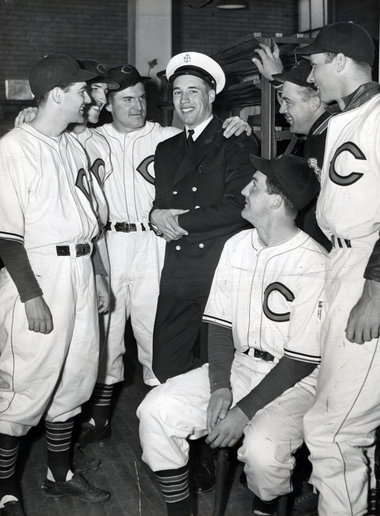

CLEVELAND, Ohio -- Hi Corbett Field was nearly empty on a long ago spring morning.
Bob Feller was the only occupant on the Indians' spring training grounds. He was in right field, in full uniform, going through his pitching delivery. He'd come to a set position, whirl and throw the ball into the right field wall.
Feller was practicing his pickoff move to second. Why not? He was only in his 70s.
Bob Feller, the greatest Indian of them all, is gone. He died Wednesday night and baseball in Cleveland will never be the same.
The birth of the new season didn't mean a thing until Feller walked into the spring-training press room, cracking jokes and passing out a new set of his autographed baseball cards to anyone within arm's reach. It didn't matter if it was Tucson, Ariz., Winter Haven, Fla., or Goodyear, Ariz., the sun couldn't shine and Indians players couldn't start pulling their hamstrings until No.19 reported.
He was sharp of mind, a red state unto himself and had an opinion on everything. He moved easily among the rich and famous. He danced with Marilyn Monroe, pitched to Joe DiMaggio and Ted Williams, mingled with admirals and generals. Everyone knew Rapid Robert, the Heater from Van Meter.
In Winter Haven one morning, reporters were talking about what Indians players might open the season on the disabled list. The war in Iraq was raging on and Feller quickly tied the two together.
"I was just in Washington, D.C., talking to some generals," Feller said. "I'll tell you who's going on the disabled list ... Saddam Hussein."
Feller won 266 games with the Indians, throwing three no-hitters and 12 one-hitters. At his peak, he joined the U.S. Navy right after Pearl Harbor in 1941 and lost nearly 3 1/2 years of his career in World War II.
Feller told me it probably cost him about 60 victories, but he had no regrets about going to war.
"We were getting the hell kicked out of us," he said. "I thought we needed some help."
My favorite memory of Feller was listening to him talk about the barnstorming tour he organized with Satchel Paige and other Negro League stars. It was a blue-sky day at Chain of Lakes Park in Winter Haven as Feller talked to a group or reporters, but he made it sound as if the tour between big-league stars and Negro League greats happened yesterday.
Feller organized the tour, booked the hotels and travel. I don't know if he sold tickets, but he may have. He and Paige pitched two to three innings every day of the tour. He remembered dates, towns and crowd sizes.
He ranked Paige as one of the top 20 pitchers of all time. He gave scouting reports on other Negro League players, turning the mist of legend into muscle and flesh. It was an oral history of baseball and I'm still kicking myself for not taping it.
In last season's World Series between San Francisco and Texas, the Giants had Hall of Famers Juan Marichal, Willie McCovey, Orlando Cepeda and Gaylord Perry throw out the first pitch from Game 1. Willie Mays would have been there, but he wasn't feeling well.
In Cleveland, the Indians only had Feller at that pristine level of baseball greatness. The good thing was he was he never left.
• Playing catch in front of the Indians' dugout with Omar Vizquel in Winter Haven just before game time as the PA announcer reeled off his statistics that the crowd knew by heart.
• Sitting in the press box for the opening of Jacobs Field in 1994 as Seattle's Randy Johnson threatened, but eventually failed to match his record for throwing the only opening day no-hitter in history.
• Telling you his itinerary for his next round of card shows, "I'm in Dubuque on Tuesday, Nashville on Friday, Chicago on Sunday. Then I'm going to Iowa and we're going to walk out of a corn field just like in the movie."
He made his living by being Bob Feller. Herb Score used to call him "Inc." He was Bob Feller, Incorporated.
Several years ago he was asked how much he would be worth at free agent prices. He said without hesitation $15 million to $17 million a year. It was clear he'd thought about it. Today he'd be short-changing himself.
I wonder what Feller would have done if he pitched in the free-agent era? Would he have played his whole career in Cleveland? His talent certainly made him a one-team player such as Cal Ripken Jr. or Tony Gwynn. Or would he have left for more money and better opportunities like so many others?
Such thoughts are not for the moment. Today is for being grateful that we had Bob Feller among us for so long. That he was always there and in no hurry to leave.
Most underrated RH starter: Bob Feller

Editor's Note: The following is an excerpt from "The Stark Truth: The Most Overrated and Underrated Players in Baseball History" by Jayson Stark. Copyright (c) 2007 by the author. This excerpt has been printed with the permission of Triumph Books. For information on how to purchase the book, click here.
I'm still convinced that Bob Feller is the most underrated righthander who ever lived. But only because he is.
Imagine this kid, at 17 years old, pitching an exhibition game in 1936 against a Cardinals team still rolling out most of the lineup that had won the World Series in 1934 -- and striking out EIGHT of the nine hitters he faced. Imagine this kid, a few weeks later, making the first start of his big-league career, and whiffing 15 St. Louis Browns. Imagine him, three weeks after that, ripping off 17 K's against the Athletics -- the biggest strikeout game in American League history at the time. Now imagine him, just a couple of weeks later, heading back home to Iowa -- so he could ride the SCHOOL BUS with his sister and finish high school. All true. It all happened. In real life. He was the LeBron James of his era -- except with a 12-to-6 curve instead of a learning curve.
How many American teenagers have had the impact on their country that Bob Feller once did? His high school graduation was broadcast live -- to the whole U.S.A. (on NBC radio). His face was on the COVER of Time Magazine before he'd even started 10 big-league games. So it's pretty clear Bob Feller wasn't overrated back then.
But that was then. This is now, all these decades later. And Feller no longer gets his due. When ESPN asked its in-house stable of baseball "experts" (full disclosure: myself included) to rank baseball's greatest living pitchers in May of 2006, Feller finished sixth. But in an accompanying ESPN Sports Nation poll of ESPN.com surfers, Feller didn't even make the top 10. (The only other Sports Nation omission from the experts' top 10: Juan Marichal.) Seven years earlier, in the fan voting for the All-Century team, Feller wasn't even close, finishing 13th (with nearly 740,000 fewer votes than Ryan).
So what's up with that?
We'd better remind you -- assuming you ever knew -- just how enormous a figure Feller was in his time. Over the first 95 seasons in the existence of Major League Baseball, only one pitcher cranked out four straight seasons of 240 strikeouts or more -- Bob Feller. In that same period, he and Walter Johnson were the only pitchers who ever led their league in strikeouts 10 or more seasons apart. Through the first nine seasons of Feller's career, he was the most unhittable pitcher in history (allowing just 7.01 hits per 9 innings). And the real proof was all those games in which nobody -- or just about nobody -- got a hit. This man threw three no-hitters and TWELVE one-hitters. Until Nolan Ryan came along, the only pitcher in the 20th century with even half as many combined no-hitters and one-hitters was Walter Johnson (one no-hitter, seven one-hitters). And Feller was the only 20th-century pitcher with three no-hitters until Sandy Koufax showed up.
Feller also just might be (ahem) The Hardest Thrower Who Ever Lived. We'll never know for sure, of course. In his day, there were no radar guns attached to every scoreboard in America -- possibly because radar had only been invented about 20 minutes earlier. But there's one expert who KNOWS (totally for sure) that Feller was The Hardest Thrower Who Ever Lived. And that would be the ever-modest Feller himself.
I'll never forget, back in the 1997 Indians-Marlins World Series, the radar board in Florida threw a "102 mph" up there after one fateful fastball by Marlins closer Robb Nen. Yep, 102. Never saw one of THOSE before. Before the game the next day, the New York Post's Tom Keegan and I spotted Feller on the field. So we decided to ask for ourselves whether he thought he'd ever thrown a pitch that traveled 102 miles an hour. "Hell," he said, "that was my CHANGE-UP."
Feller then proceeded to tell a story about some gizmo, or military invention, called the Electric Cell Device. This was some kind of chamber -- no longer available at a Wal Mart near you -- that was used back in 1946 to clock his fastball. Feller claimed he whooshed a pitch through the old ECD that was measured at 107.9 miles per hour. Must have been that point-9 that made him so hard to hit.
Virtually from the minute he threw his first pitch, there was so much national fascination with Feller and his heater that folks were constantly looking for ways to figure out whether his 100-mph flameball was reality or myth. So in 1940, Feller was lined up for his most legendary pitcher's duel -- with a speeding motorcycle. Just as the motorcycle varoomed by him at 86 mph, Feller launched his fastball at a target 60 feet, 6 inches away. The baseball won that race so easily, it was calculated that his Harley-ball was traveling at 104 mph. Oh by the way, a small hole had been cut out of the target so a camera could record this fabled pitch -- and Feller launched his fastball right through the target, wiping out the camera. So don't try to buy that historic photo on eBay any time soon.
Now no doubt you Nolan Ryan fans out there are saying: "What's the big whoop?" There are all kinds of stories about Ryan -- who was elected (by me) as the most overrated righthanded starter of all time in this book -- that sound just like these, right? Well, there is one significant difference between Ryan and Feller: Feller consistently found ways to convert his smokeball and all his whiffs into wins.
Feller had seven seasons of at least 15 wins and a .
Feller got through war, then got hurt
At the conclusion of the 1941 season, Bob Feller was 22 years old and he'd won 107 games in the major leagues. At that pace ... well, if Feller had continued pitching that well until he was 42, he would have challenged Cy Young's more impressive records.
A war got in the way.
The way Feller told the story, on the 7th of December he was driving his new Buick from his home in Iowa to Chicago, for a meeting with Cy Slapnicka, Cleveland's general manager, and manager Roger Peckinpaugh. Feller expected to sign a new contract for 1942.
Car radios were still uncommon in 1941, and expensive. But when you win 107 games before your 23rd birthday, you can afford the radio and a tinny-sounding speaker. Crossing the Mississippi River into Illinois, Feller heard the bulletin: Japan had attacked Pearl Harbor.
"I knew that the purpose of our meeting had just changed," Feller would write, nearly 50 years later. He would tell Slapnicka and Peckinpaugh that instead of signing a new contract, he would be signing enlistment papers for the U.S. Navy. Immediately.
He could have waited to be drafted, and almost certainly would have been able to continue playing baseball through 1942, at least; with his father terminally ill, Feller was his family's sole financial support. Some players weren't drafted until after the 1943 season. But Feller went right in, voluntarily. A few months into his enlistment, tired of a cushy stateside posting, he pressed for combat duty and spent much of 1943 and '44 commanding a gunnery crew on a battleship, the U.S.S. Alabama.
By the time Feller returned to baseball in 1945, he'd missed more than three-and-a-half seasons. Among the first stars to come back, Feller would be a sort of guinea pig, as nobody knew what such a long layoff would mean for professional baseball players (many of whom would miss two or three full seasons).
In the event, most (though not all) of them picked up right where they'd left off.*
* Most of the stars, anyway. Many dozens of lesser players lost their prime seasons because of the war -- not to mention all the younger men who lost their lives or their health -- and never played in the majors, or even professional baseball, at all.
Of course, eventually another question would come up. From Feller's 1990 autobiography, "Now Pitching: Bob Feller":
Then people began to wonder how we would have done if the war hadn't come along. Baseball fans filled many an hour in those days with that "what-if" question. Eventually, an analyst in Seattle, Ralph Winnie, sat down at his computer and figured out the answers.
He took our individual stats for the last three years before our military services and our first three years after the war, then averaged them out on a per-season basis and projected them across the war years...
In my case, Winnie projected that I would have 107 more games, finishing with 373 career wins instead of 266, with another 1,070 strikeouts, five no-hitters instead of three and 19 one-hitters instead of 12. He calculated that I would have finished with the sixth most wins in history instead of 28th and the seventh most shutouts instead of 29th.
In his book, Feller tempered those numbers a bit, writing, "It may not prove anything ... We could have been injured and missed a full season or slipped on a banana peel, who knows?"
In the years after Feller's book was published, he became more outspoken in his political views -- somewhat famously in these parts, during an ESPN.com chat he went off on "Hanoi Jane" Fonda -- and more willing to take credit for the statistics that might have been his, absent the war.
Realistically, I think such exercises are more instructive for hitters than pitchers, simply because hitters don't run the same injury risk that pitchers do. Feller might have been injured if he'd kept on pitching during the war years. From his Age 19 through Age 22 seasons, Feller averaged 309 innings per season ... though whether that means he was primed for an injury or was invulnerable to fatigue, I really can't hazard a guess.
Upon Feller's discharge from the Navy in August 1945, he returned to the Indians and pitched well in nine late-season starts. In 1946, he enjoyed one of his best seasons, leading the American League in wins (26), games pitched (48), games started (42), complete games (36), shutouts (10), innings (371) and strikeouts (348).
Feller got off to a fine start in 1947, but hurt his knee in June and was never really the same. From that point through the end of his career, nine mostly humdrum years later, he struck out just slightly more than four batters per nine innings.
People wonder how Bob Feller would have done if the war hadn't come along. I wonder how Bob Feller would have done if he hadn't lost his All-World fastball before he turned 29 - Rob Neyer
A war got in the way.
The way Feller told the story, on the 7th of December he was driving his new Buick from his home in Iowa to Chicago, for a meeting with Cy Slapnicka, Cleveland's general manager, and manager Roger Peckinpaugh. Feller expected to sign a new contract for 1942.
Car radios were still uncommon in 1941, and expensive. But when you win 107 games before your 23rd birthday, you can afford the radio and a tinny-sounding speaker. Crossing the Mississippi River into Illinois, Feller heard the bulletin: Japan had attacked Pearl Harbor.
"I knew that the purpose of our meeting had just changed," Feller would write, nearly 50 years later. He would tell Slapnicka and Peckinpaugh that instead of signing a new contract, he would be signing enlistment papers for the U.S. Navy. Immediately.
He could have waited to be drafted, and almost certainly would have been able to continue playing baseball through 1942, at least; with his father terminally ill, Feller was his family's sole financial support. Some players weren't drafted until after the 1943 season. But Feller went right in, voluntarily. A few months into his enlistment, tired of a cushy stateside posting, he pressed for combat duty and spent much of 1943 and '44 commanding a gunnery crew on a battleship, the U.S.S. Alabama.
By the time Feller returned to baseball in 1945, he'd missed more than three-and-a-half seasons. Among the first stars to come back, Feller would be a sort of guinea pig, as nobody knew what such a long layoff would mean for professional baseball players (many of whom would miss two or three full seasons).
In the event, most (though not all) of them picked up right where they'd left off.*
* Most of the stars, anyway. Many dozens of lesser players lost their prime seasons because of the war -- not to mention all the younger men who lost their lives or their health -- and never played in the majors, or even professional baseball, at all.
Of course, eventually another question would come up. From Feller's 1990 autobiography, "Now Pitching: Bob Feller":
Then people began to wonder how we would have done if the war hadn't come along. Baseball fans filled many an hour in those days with that "what-if" question. Eventually, an analyst in Seattle, Ralph Winnie, sat down at his computer and figured out the answers.
He took our individual stats for the last three years before our military services and our first three years after the war, then averaged them out on a per-season basis and projected them across the war years...
In my case, Winnie projected that I would have 107 more games, finishing with 373 career wins instead of 266, with another 1,070 strikeouts, five no-hitters instead of three and 19 one-hitters instead of 12. He calculated that I would have finished with the sixth most wins in history instead of 28th and the seventh most shutouts instead of 29th.
In his book, Feller tempered those numbers a bit, writing, "It may not prove anything ... We could have been injured and missed a full season or slipped on a banana peel, who knows?"
In the years after Feller's book was published, he became more outspoken in his political views -- somewhat famously in these parts, during an ESPN.com chat he went off on "Hanoi Jane" Fonda -- and more willing to take credit for the statistics that might have been his, absent the war.
Realistically, I think such exercises are more instructive for hitters than pitchers, simply because hitters don't run the same injury risk that pitchers do. Feller might have been injured if he'd kept on pitching during the war years. From his Age 19 through Age 22 seasons, Feller averaged 309 innings per season ... though whether that means he was primed for an injury or was invulnerable to fatigue, I really can't hazard a guess.
Upon Feller's discharge from the Navy in August 1945, he returned to the Indians and pitched well in nine late-season starts. In 1946, he enjoyed one of his best seasons, leading the American League in wins (26), games pitched (48), games started (42), complete games (36), shutouts (10), innings (371) and strikeouts (348).
Feller got off to a fine start in 1947, but hurt his knee in June and was never really the same. From that point through the end of his career, nine mostly humdrum years later, he struck out just slightly more than four batters per nine innings.
People wonder how Bob Feller would have done if the war hadn't come along. I wonder how Bob Feller would have done if he hadn't lost his All-World fastball before he turned 29 - Rob Neyer
In his 92 years, Feller saw it all
In his 92 years, Feller saw it all
December, 15, 2010 Dec 1511:30PM ETEmail Print Comments8 By Rob Neyer
I'm sorry to hear about Bob Feller's passing, if not surprised. Most of us have been around long enough what it means when a 92-year-old man is transferred to hospice care. At that point, one can only hope for a peaceful end and perhaps a few more good moments with loved ones.
Bob Feller actually lasted a bit longer than some thought. Almost a week ago, the Northern Ohio Journal actually reported Feller's death, and columnist Jim Ingraham wrote a lovely tribute. That was yanked from the Journal's website a few hours later, but I think this passage is a fine introduction:
Bob Feller won his first 100 games before the age of 23. He died Wednesday at the age of 92.At either end of his life he mocked convention. He made his major league debut -- this is beyond outrageous -- at 17. In his first major league start he set a major league record for strikeouts in a game, and then after that season went back to high school for his senior year. Think about that.
He lived to be 92. How many 92-year-olds do you know?
The year he was born, Alexander Graham Bell was still alive. So were Wyatt Earp and Orville Wright.
When Feller debuted in Van Meter, Iowa, Christy Mathewson was still alive. So were Honus Wagner, Napoleon Lajoie, and Cy Young.
Ty Cobb? Not only was he still alive, he was STILL PLAYING!
As a 17-year-old rookie with the Indians in 1936, Feller needed a place to live. Cy Slapnicka, the scout who signed him, found a room for him in a boarding house in Cleveland. One of Feller’s fellow-boarders in the house had fought in the war -- the Civil War.
As amazing all of those things are, the one thing that always sticks in my head is this: Bob Feller pitched against Lou Gehrig. All the other big stars in the American League in the late 1930s, too. Joe DiMaggio. Jimmie Foxx. Hank Greenberg. Ted Williams.
Of course they're all gone, now. Nearly all of them, anyhow. Hall of Famer Bobby Doerr was actually born a few months before Feller, and debuted in the majors roughly a year after Feller. Hall of Famer Monte Irvin was born just a few months after Feller, though thanks to baseball's segregation he wouldn't reach the (previously all-white) major leagues until he was 30.
Even with Feller's passing, they're still around. It just gets a little harder to find them, all the time.
Almost to the end, though, it was rarely hard to find Bob Feller. Just a few years ago, I saw him give a rousing talk at the SABR Convention in Cleveland. Last summer he was still regularly showing up at the ballpark, one of the few men on earth who had seen Babe Ruth hit, and pitched to Lou Gehrig. And he was still crusty, unimpressed by young players who haven't won a lot of games or enlisted in the Navy during a war or been elected to the Hall of Fame.
Too crusty, maybe, by just a little. Upon seeing Stephen Strasburg in the flesh, Feller said, "Call me when he wins his first 100."
Granted, I've probably said something similar a few times. But when Bob Feller said it, people actually paid attention. He wasn't nasty (well, not often). He was opinionated, and the older he got the more willing he was to express his opinions.
Of course, he won his first 100 games before he turned 23, and did enlist to fight in a war, and was elected to the Hall of Fame. If anyone ever earned the right to the occasional bout of crustiness, it was probably Rapid Robert Feller
http://espn.go.com/blog/sweetspot/post/_/id/6557/in-his-92-years-feller-saw-it-all
December, 15, 2010 Dec 1511:30PM ETEmail Print Comments8 By Rob Neyer
I'm sorry to hear about Bob Feller's passing, if not surprised. Most of us have been around long enough what it means when a 92-year-old man is transferred to hospice care. At that point, one can only hope for a peaceful end and perhaps a few more good moments with loved ones.
Bob Feller actually lasted a bit longer than some thought. Almost a week ago, the Northern Ohio Journal actually reported Feller's death, and columnist Jim Ingraham wrote a lovely tribute. That was yanked from the Journal's website a few hours later, but I think this passage is a fine introduction:
Bob Feller won his first 100 games before the age of 23. He died Wednesday at the age of 92.At either end of his life he mocked convention. He made his major league debut -- this is beyond outrageous -- at 17. In his first major league start he set a major league record for strikeouts in a game, and then after that season went back to high school for his senior year. Think about that.
He lived to be 92. How many 92-year-olds do you know?
The year he was born, Alexander Graham Bell was still alive. So were Wyatt Earp and Orville Wright.
When Feller debuted in Van Meter, Iowa, Christy Mathewson was still alive. So were Honus Wagner, Napoleon Lajoie, and Cy Young.
Ty Cobb? Not only was he still alive, he was STILL PLAYING!
As a 17-year-old rookie with the Indians in 1936, Feller needed a place to live. Cy Slapnicka, the scout who signed him, found a room for him in a boarding house in Cleveland. One of Feller’s fellow-boarders in the house had fought in the war -- the Civil War.
As amazing all of those things are, the one thing that always sticks in my head is this: Bob Feller pitched against Lou Gehrig. All the other big stars in the American League in the late 1930s, too. Joe DiMaggio. Jimmie Foxx. Hank Greenberg. Ted Williams.
Of course they're all gone, now. Nearly all of them, anyhow. Hall of Famer Bobby Doerr was actually born a few months before Feller, and debuted in the majors roughly a year after Feller. Hall of Famer Monte Irvin was born just a few months after Feller, though thanks to baseball's segregation he wouldn't reach the (previously all-white) major leagues until he was 30.
Even with Feller's passing, they're still around. It just gets a little harder to find them, all the time.
Almost to the end, though, it was rarely hard to find Bob Feller. Just a few years ago, I saw him give a rousing talk at the SABR Convention in Cleveland. Last summer he was still regularly showing up at the ballpark, one of the few men on earth who had seen Babe Ruth hit, and pitched to Lou Gehrig. And he was still crusty, unimpressed by young players who haven't won a lot of games or enlisted in the Navy during a war or been elected to the Hall of Fame.
Too crusty, maybe, by just a little. Upon seeing Stephen Strasburg in the flesh, Feller said, "Call me when he wins his first 100."
Granted, I've probably said something similar a few times. But when Bob Feller said it, people actually paid attention. He wasn't nasty (well, not often). He was opinionated, and the older he got the more willing he was to express his opinions.
Of course, he won his first 100 games before he turned 23, and did enlist to fight in a war, and was elected to the Hall of Fame. If anyone ever earned the right to the occasional bout of crustiness, it was probably Rapid Robert Feller
http://espn.go.com/blog/sweetspot/post/_/id/6557/in-his-92-years-feller-saw-it-all
Subscribe to:
Posts (Atom)